A brief and a detailed guide on how to do video consultations by Dr Ruth Chambers OBE, with permission from Prof Trish Greenhalgh OBE for some of the material within.
The detailed guide can be found here.
Brief Guide
By Dr Ruth Chambers OBE. The pdf of the guide can be downloaded here.
Video consultation – How to Guide for General Practice
Times have changed in 2020 with the onslaught of the COVID-19 pandemic, and general practice teams who have previously not used video consultation as a usual mode of delivery of service, are having to adopt it, and other modes of remote interaction such as online consultation triage, phone, email.
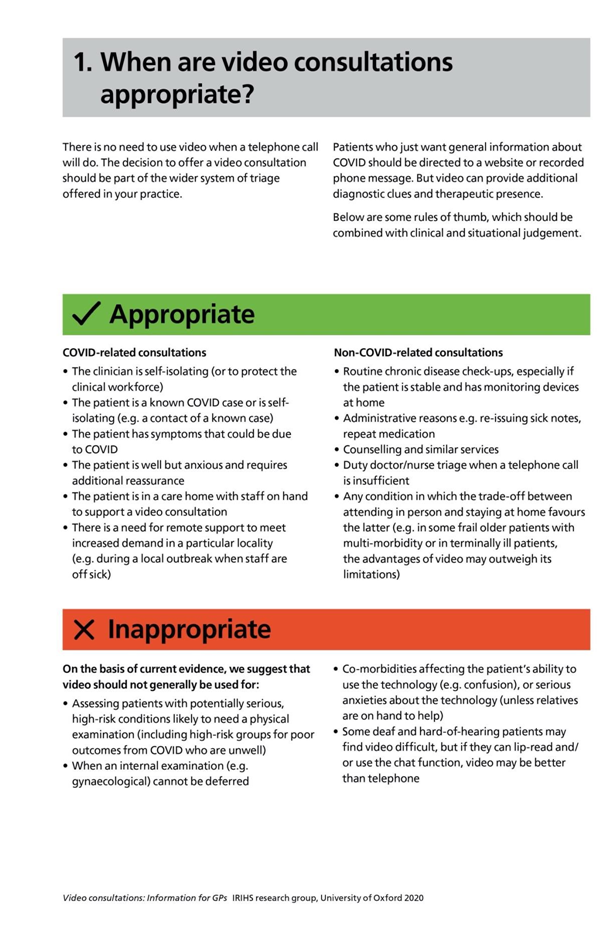
Not every patient’s problem can be dealt with remotely. It is still the responsibility of the individual clinician to decide on the suitability of using video consultation after intelligent triage (as opposed to face to face consultation justified after COVID-19 screening in surgery or patient’s (Care) home setting; or telephone or email consultation) per presenting complaint for each patient.
NHSX and the Information Commissioner have relaxed the national regulations and encourage video consultation as usual service.1 They specifically state that video-calling tools such as Skype, WhatsApp, Facetime as well as commercial products designed for video consultation can be used. Written explicit patient consent, previously required is no longer necessary – the consent of the patient or service user is implied by them accepting the invite and entering the consultation. But as a clinician you should safeguard personal or confidential patient information as you would for any other type of consultation. You can use your own device for video consultations and mobile messaging from your own home – with usual safety approach of setting a strong password, using secure channels that use encryption, and not storing personal or confidential patient information on the device unless absolutely necessary with appropriate security in place. You’ll need to transfer the information from the remote consultation to the patient’s medical record as soon as you can practically do. The General Medical Council and other health regulators have published a supportive joint statement for this approach.2
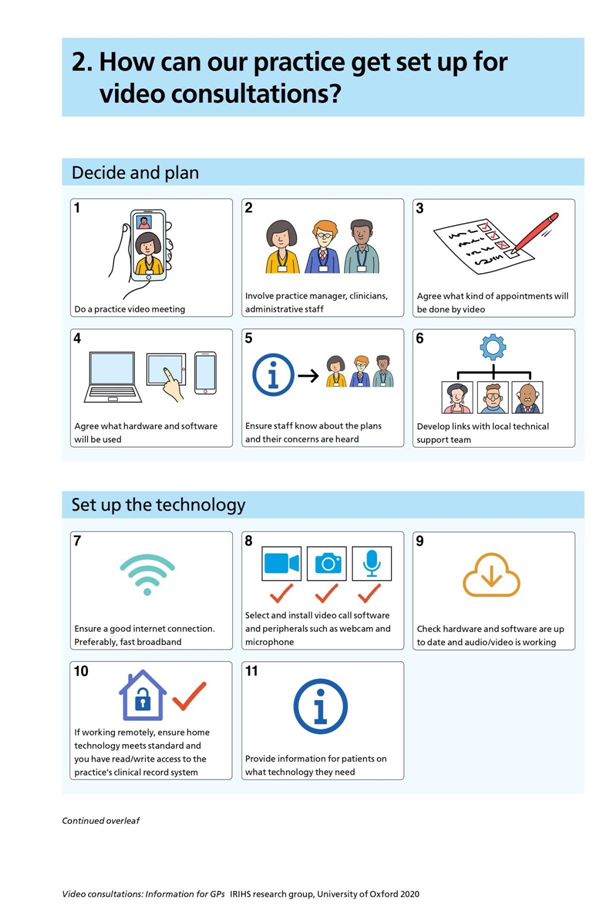
A number of companies such as AccuRx are providing video technology packages to GPs and other responsible practice clinicians. These can be used on your personal mobile devices without exposing your personal contact details.
Most patients with COVID-19 or suspected of it, can be managed remotely with advice on symptomatic management and self-isolation. The video consultation element provides additional visual aid to gauging the patient’s signs and discussing their symptoms.
The video consultation must still be conducted with usual delivery by a trusted clinician, in a private location with a good professional approach – looking the part (you/your setting), personal engagement, checking identity of patient, running the consultation from greeting to wrapping up as you’d usually do if sitting in your practice with face to face consultation. If the video consultation is between a clinician and patient in a Care Home, the carer may have been able to take biometric measurements of the patient prior to the video-call or during it- by arrangement:
e.g. BP, temperature, weight, oxygen saturation, pulse rate, blood glucose, sputum colour, peak flow.
Useful things you can do on a video call:
- Resize the screen – click and drag the corner of the video screen to make it bigger or smaller.
- Move it around – click and drag the video of yourself around your screen.
Instant message (IM) at the same time – click the Show messages link at the top of the video to instant message while you’re on the call.
Throughout the entirety of the consultation take the following approach: usual best practice clinical management, careful active listening, frequent checking for understanding and an interested response and final capture of the conversation.
NICE3 has responded within two weeks of the UK lockdown response to the COVID-19 crisis with a rapid guideline that promotes video consultationfor patients with pneumonia.
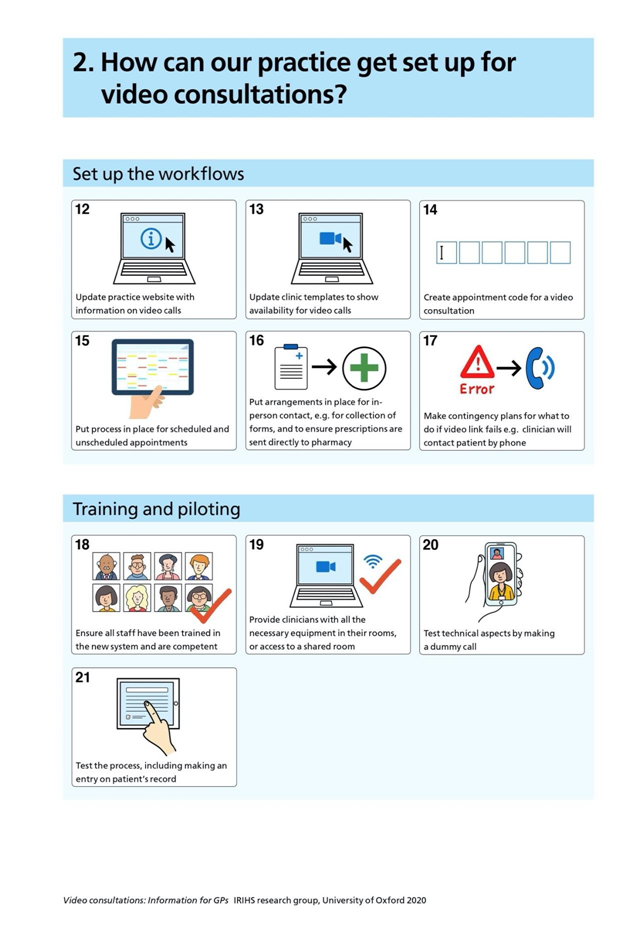
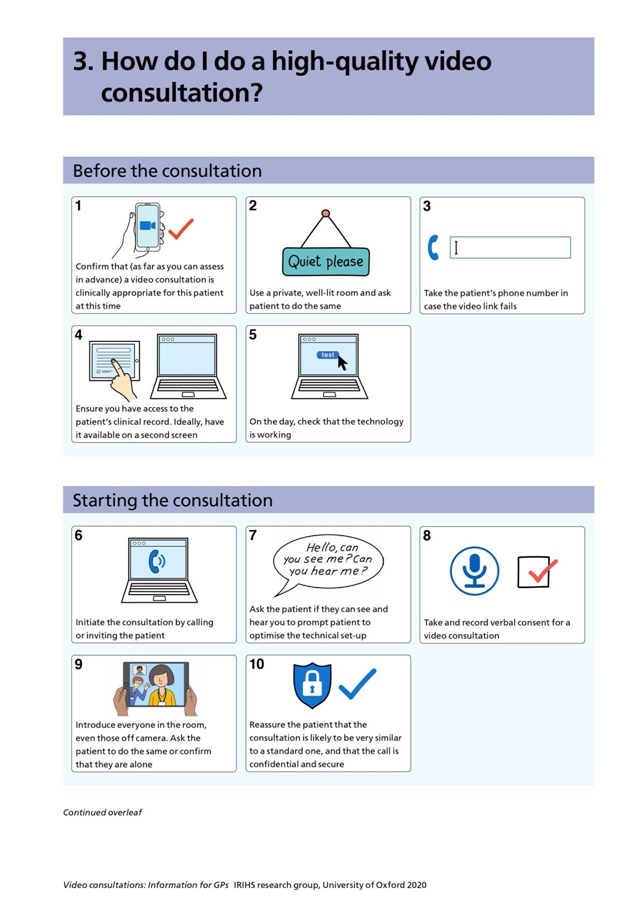
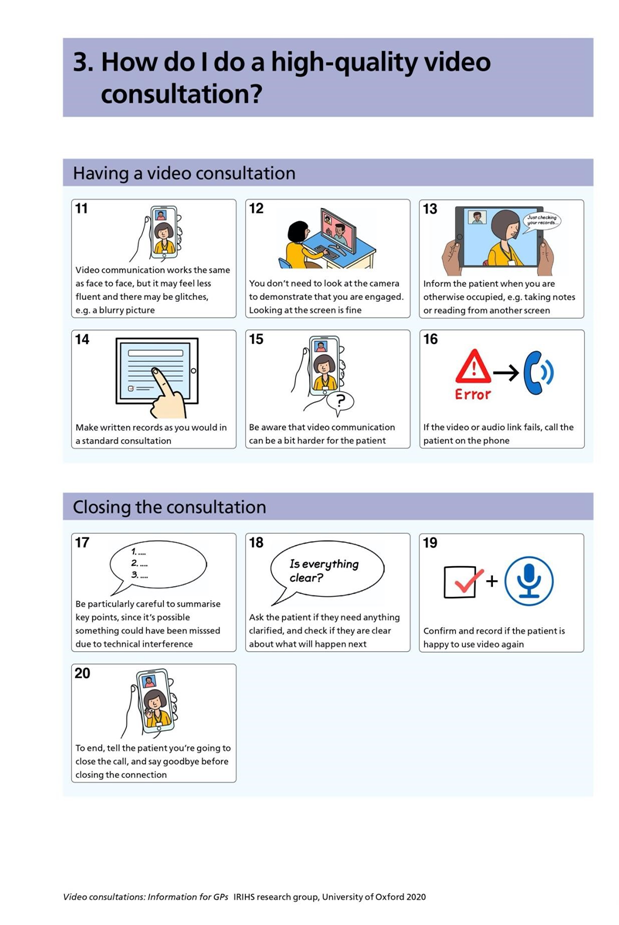
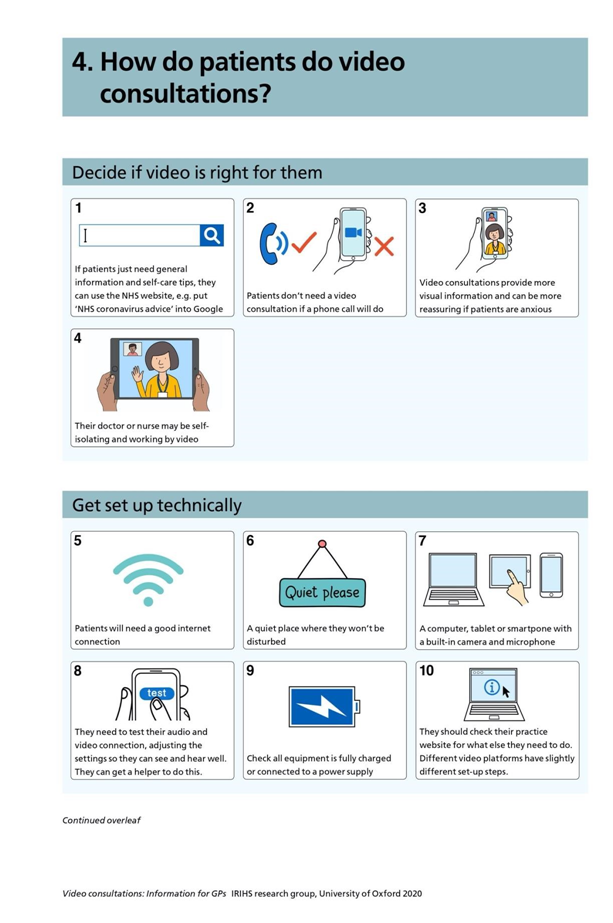
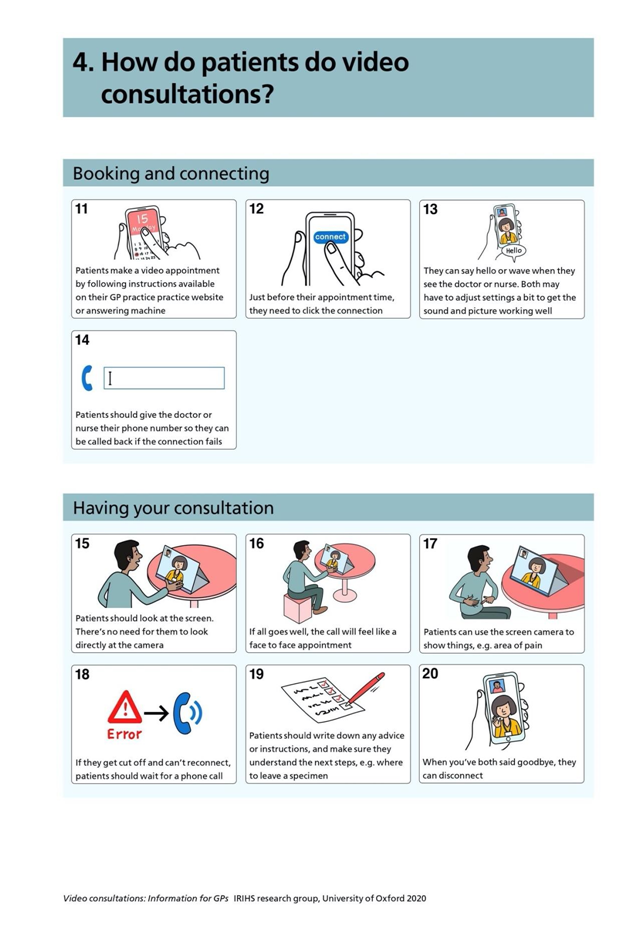
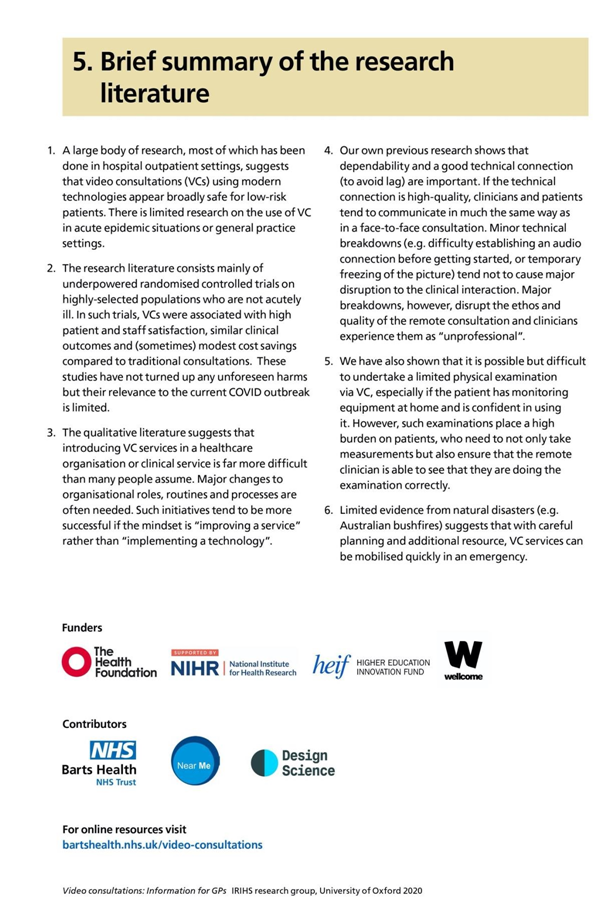
Take a look now at the following guidance for how to do it:
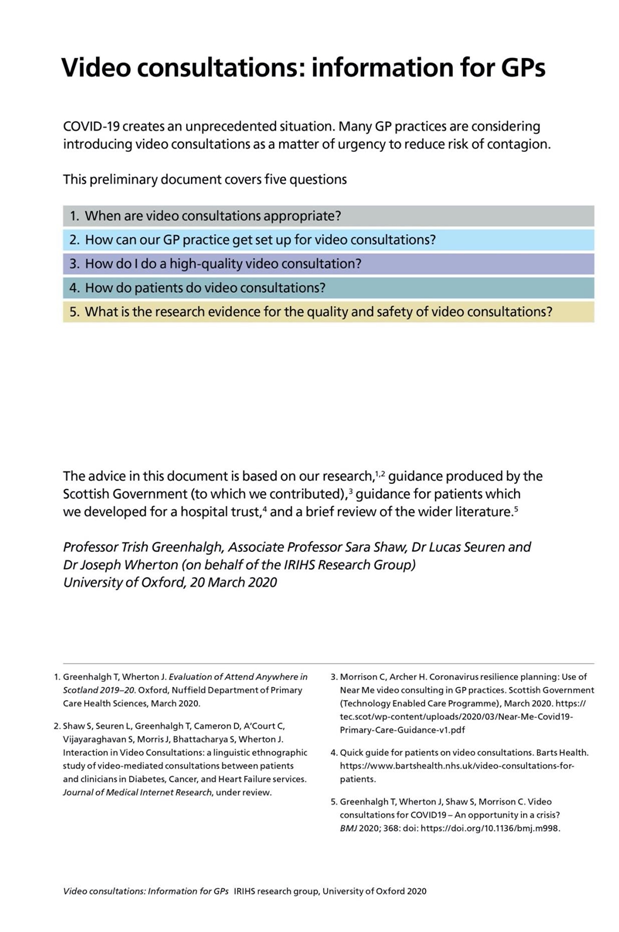
Video consultation information for GPs. Professor Trish Greenhalgh & colleagues. Online link: bartshealth.nhs.uk/video-consultations Pages 3-12
References
- Information Commissioner statement. https://ico.org.uk/about-the-ico/news-and-events/news-andblogs/2020/03/data-protection-and-coronavirus/
- Joint statement from health regulators. https://www.gmc-uk.org/news/news-archive/how-we-willcontinue-to-regulate-in-light-of-novel-coronavirus/
- National Institute for Health and Care Excellence (NICE). COVID-19 rapid guideline: managing suspected or confirmed pneumonia in adults in the community. NICE 2020. www.nice.org.uk/guidance/ng165 (accessed 4 April 2020).